
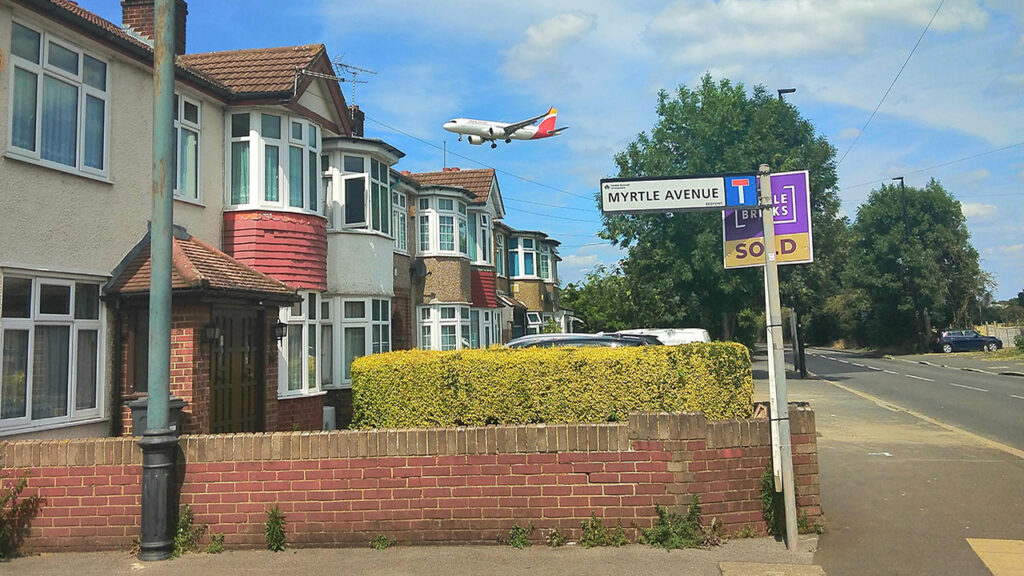
Air pollution from airports matters to local communities
Airports bring jobs, economic growth, and global connectivity. But they also have downsides, bringing extra noise and air pollution that can affect millions of people in surrounding regions.
Professor Alastair Lewis recently produced a rapid response report for the Parliamentary Office of Science and Technology on the health impacts of airports on local residents. We spoke to him about airports, air pollution, health, regulation, and the role of atmospheric scientists.
What air pollution comes from an airport?
“Aircraft engines release a mix of pollutants into the air, including nitrogen oxides and particulate matter. Aircraft-related air pollution is not just about how many planes fly, it is also about how airports operate. Emissions occur not just during take-off and landing, but also while planes taxi, idle, and queue on the runway,” explains Professor Alastair Lewis, atmospheric chemist at the National Centre for Atmospheric Science and University of York, and Chair of the UK Government’s independent science advisory body on air pollution, the Defra Air Quality Expert Group.
Importantly, this pollution does not stay within the boundaries of the airport – it can travel tens of kilometres, especially downwind. This means that communities well outside airport grounds can still be affected. Ground delays increase the time aircraft engines run at low power, a state that can produce higher emissions close to the ground where nearby residents are most exposed.
“Over the past two decades, cleaner road vehicles have reduced traffic-related air pollution. While aircraft still emit less nitrogen oxide overall than road transport, their relative contribution is increasing as other sectors clean up faster,” adds Alastair.
Future projections suggest aviation emissions may remain broadly the same through to 2040, even as road emissions fall sharply. Sustainable aviation fuels may help cut greenhouse gas emissions and impacts on climate change, but they will not eliminate exhaust pollution and their impacts on air pollution are still uncertain.
How does air pollution affect health?
A growing body of evidence links airport-related air pollution to real-world health impacts. Globally, an estimated 16,000 premature deaths each year are attributed to civil aviation-related air pollution. Around a third of these were within 20 kilometres of airports.
Emissions of nitrogen oxides and particulate matter are associated with respiratory and heart disease, as well as longer-term conditions such as diabetes and cancer. Ultrafine particle matter emissions are of particular concern because they are not routinely regulated or monitored, despite emerging evidence of their health effects.
Research shows that on days with longer aircraft taxi times, people living within 10 kilometres of airports were more likely to be hospitalised for respiratory and cardiovascular problems. This makes it clear that airport efficiency is a public health issue.
Are there regulation gaps on airport air quality?
“Despite the clear health links, air pollution from airports sits in a regulatory grey area. Local authorities are responsible for local air quality, but existing frameworks mainly focus on roads and industry. Unlike power stations or factories, individual airports do not have caps on air pollutant emissions. Airports can incentivise lower emissions by charging higher polluting aircraft more to use the airport facilities, but otherwise they have little control over emissions. Organisations involved in aviation management, such as the Civil Aviation Authority and airport operators are not legally responsible for meeting national or local air quality standards,” outlines Alastair.
International limits on aircraft emissions exist, but these are not designed to protect people living near airports from everyday exposure. This gap highlights the importance of robust atmospheric science to inform smarter policy and regulation.
What is the role of atmospheric scientists?
This is where NCAS and the wider atmospheric science community make a difference. By measuring pollution from the ground and in the air, modelling how it moves through the atmosphere, and working with medical researchers to link exposure to health outcomes, atmospheric scientists provide the evidence policymakers need to protect communities.
Atmospheric research also has the potential to identify which mitigation measures work – from cleaner ground operations and smarter airport design, to using sustainable aviation fuel and fairer planning decisions.
“By improving our understanding of airport air pollution, atmospheric science supports healthier planning, better regulation and more informed public debate. It ensures that decisions about aviation consider not just where we fly, but how we live and breathe on the ground,” comments Alastair.