

Investigating air quality in busy UK ports
Researchers are carrying out new measurements in Southampton to better understand how emissions from ships affect local air quality in coastal communities.
Dr Will Drysdale, a postdoctoral researcher, is part of a team of researchers from the National Centre for Atmospheric Science and University of York that are using a specially equipped mobile laboratory to measure pollution linked to one of the UK’s busiest ports.
Southampton hosts a high volume of maritime traffic, including frequent visits from large cruise ships, making it a prime location to study shipping emissions.
Shipping is an important but relatively underexplored source of air pollution in coastal towns and cities. In Southampton, emissions from vessels, particularly when cruise ships are docked, can be transported into residential areas under certain weather conditions, such as prevailing southwesterly winds.
– Dr Will Drysdale, a research scientist at the University of York and NCAS
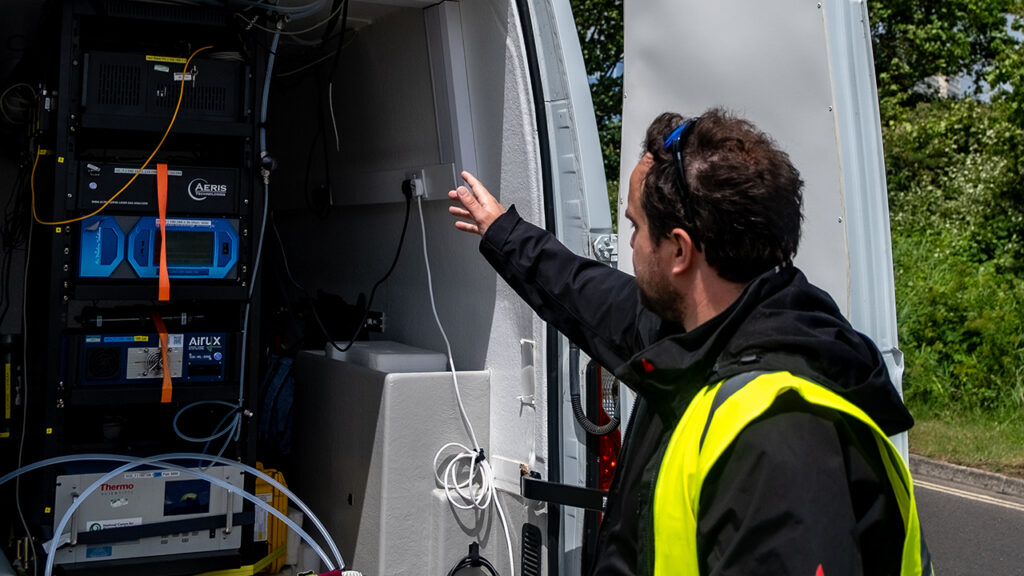
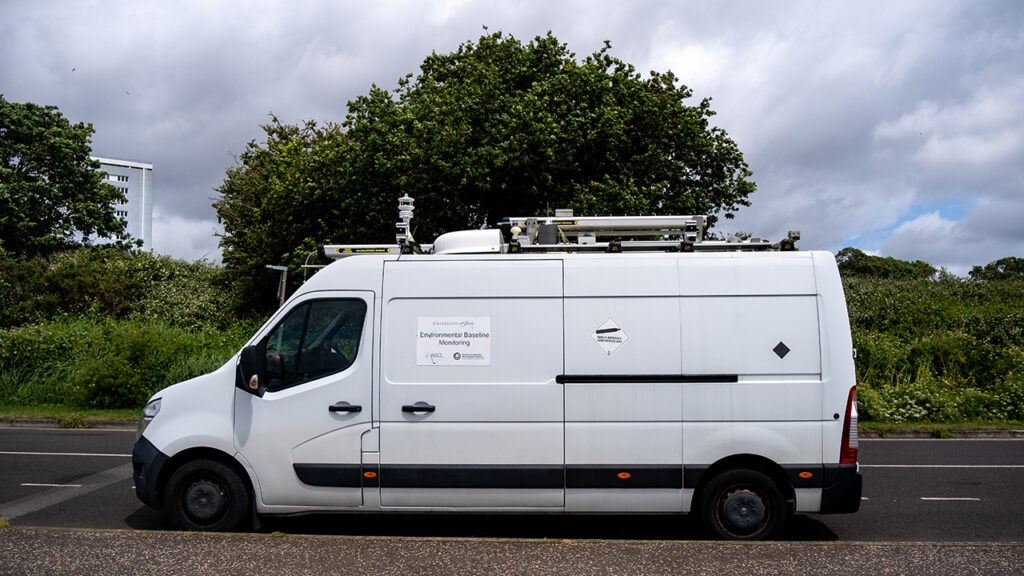
To capture these impacts, the team is deploying a “lab in a van” – a mobile sampling platform fitted with a suite of advanced air quality monitors. This flexible setup allows the research team to measure pollutant concentrations at fixed locations and while driving through the city.
By positioning the mobile lab downwind of busy shipping lanes, the team can directly observe emissions from passing vessels. In addition, mobile surveys across the port area enable comparisons between upwind and downwind locations, helping to quantify the broader contribution of shipping activity to local air pollution.
The research aims to fill key knowledge gaps about the scale and variability of shipping-related emissions, particularly in urban coastal settings where large numbers of people live and work close to ports.
Understanding how these emissions disperse and affect air quality is essential for informing future mitigation strategies. Our measurements will help build a more complete picture of the impact of shipping on local environments and public health.
– Dr Will Drysdale
The campaign reflects NCAS’s wider commitment to advancing atmospheric science through targeted field experiments, providing robust scientific evidence to support policy and improve air quality across the UK.
Acknowledgements
- Supported by the Clean Maritime Research Hub.
- In partnership with Incheon National University and Air Quality Associates Inc, who are providing modelled emissions data from a port air quality management system (known as PAQman), which aims to help ports manage their air quality impacts, and will be compared with measurements made in the mobile lab.
- In collaboration with STFC – RAL, to investigate the use of low cost sensors as a way to augment the PAQman’s models long term.
- The mobile air quality monitoring laboratory van is funded by NCAS and supported by the Wolfson Atmospheric Chemistry Laboratories at the University of York.