
Turning knowledge into social justice: Why climate education matters
On World Day of Social Justice, we are reminded that creating a fair, sustainable future begins with empowering people – especially young people – with the knowledge they need to navigate a rapidly changing world.
Climate change is not only an environmental issue; it is a social justice issue, an economic issue, and an educational issue. And that is why climate education matters more now than ever.
Every learner today will live their entire life in a climate different from the one their parents and grandparents grew up in. The last 20 years have been the warmest on record, and the impacts – heatwaves, floods, storms, droughts – are already shaping lives across the world and here in the UK. Understanding these changes is not optional; it is essential life learning.
– Dr Harriett Richardson, Communications Manager at the National Centre for Atmospheric Science.
The science is clear and young people deserve to understand it
Climate change isn’t abstract. It’s measurable, trackable, and visible. We know that:
- Before the Industrial Revolution, global temperatures were stable for thousands of years.
- Burning fossil fuels increased greenhouse gases, like carbon dioxide and methane, to their highest levels in hundreds of thousands of years.
- As these gases accumulate, they thicken the “blanket” around Earth, trapping heat and raising global temperatures.
- Even small temperature increases have big consequences – affecting ecosystems, weather extremes, food systems, infrastructure, and health.
This is the foundational science that every young person should have the right to understand. When students (and teachers, parents, carers) grasp the basics, such as weather vs. climate, greenhouse gases, and the human causes of warming, they gain the confidence needed to engage critically with the world around them and bring about the change they want to see.
Climate education is a tool for social justice
Climate change does not affect everyone equally. Those who contribute the least to global emissions, often communities facing social or economic disadvantage, are hit the hardest. In the UK and globally, people living with fewer resources often live in more polluted areas, have less access to cooling, greenspace or flood protection, face greater risks during extreme weather, and have fewer means to recover.
This is why the Intergovernmental Panel on Climate Change emphasises the link between climate and inequality. Climate education helps shine a light on these injustices and equips communities with the knowledge needed to build resilience.
By embedding climate literacy in schools, we give every child – not just the most privileged – access to the tools they need to understand, adapt, and advocate for their future. Climate education is therefore not just about science, it is about fairness and empowerment.
Inspiring young people to become climate leaders
There are more than 16 million learners in the UK. Their voices, creativity, and determination can inspire the whole of society. But for young people to become leaders, problem-solvers, and changemakers, they need educators who can guide them. Schools provide a unique opportunity, with:
- Classrooms that explore climate data, design solutions, and imagine future scenarios.
- Playgrounds and gardens that are hubs of biodiversity and hands-on learning.
- Every subject – from art to maths, from English to science – being an opportunity to connect learners to climate understanding.
- A school culture that models sustainability by saving energy, reducing waste, and encouraging active travel.
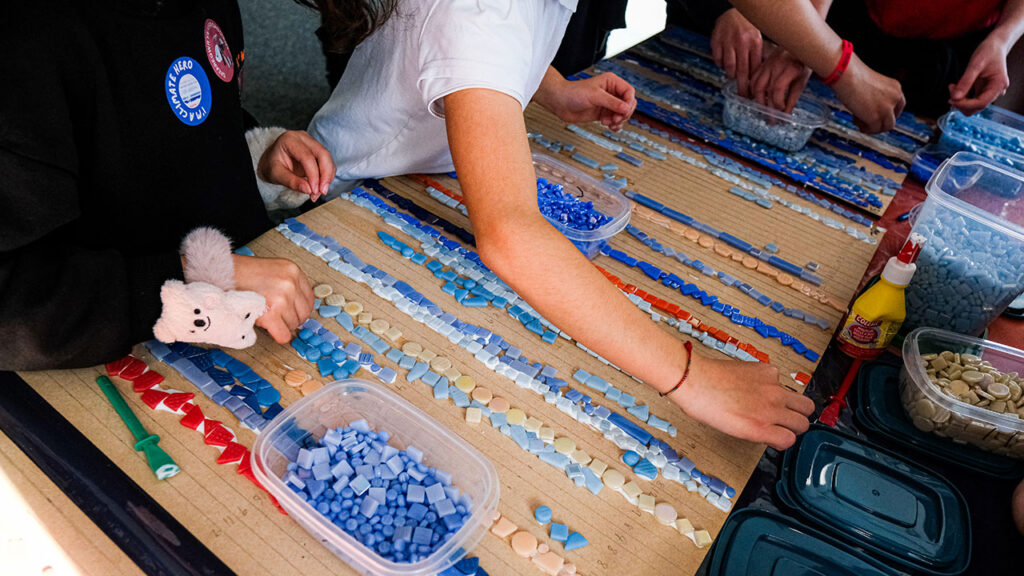
When students design climate stripe art, create local nature projects, or plan school-wide campaigns on waste or energy, they see firsthand how their actions shape the world around them.
– Dr Harriett Richardson, Communications Manager at the National Centre for Atmospheric Science.
Fighting misinformation and why critical thinking is important
The internet is crowded with climate information – some excellent, some misleading. Teachers and learners alike need the skills to recognise reliable sources, ask good questions, and verify claims. Helping young people critique online information strengthens their scientific literacy, protects them from misinformation, builds resilience against climate anxiety, and prepares them to participate in meaningful climate conversations.
By teaching students to look for evidence, transparency, scientific organisations, and multiple sources, we help them develop lifelong skills that benefit not just climate understanding, but every area of learning and critical thinking.
Education plants the seeds of hope
One of the myths about climate change is that it is “too late” to act. But the truth is more motivating: what we do now matters profoundly. The choices we make in the next decade will shape the next century. That’s why climate education must be rooted not only in science, but in hope, agency, and collective optimism.
Schools can nurture this by making changes that make schools greener and more sustainable (so learners see real-world action happening), sharing knowledge that is grounded in trusted science, nurturing collective optimism that fosters responsibility and action. When these parts work together, education becomes a driving force for young people.
We are the change we seek
Climate education moves us from fear to empowerment, from uncertainty to understanding, from passiveness to action. Every teacher, parent, carer, and learner has a role to play.
On this World Day of Social Justice, we celebrate and thank the educators preparing young people for the challenges ahead – and for the possibilities. Because when we give learners the knowledge, skills, and confidence to shape their world, we take a powerful step toward a fairer, more sustainable future for all. Climate education matters!
– Dr Harriett Richardson, Communications Manager at the National Centre for Atmospheric Science.