
Why is there Saharan dust in the UK, and what does it mean for weather and air quality?
A big cloud of Saharan dust was kicked up over west Africa a few days back, and thanks to the weather systems sweeping across the UK, it’s now drifting our way.
Why does this happen?
When the wind conditions are just right then desert dust is blown north from the Sahara. This typically happens in the summer months, but can happen in spring and autumn. We experience this as warmer than average air moving up through continental Europe over the UK.
– Dr Hugo Ricketts, instrument scientist and research fellow at the National Centre for Atmospheric Science and University of Manchester.
What does that mean for us?
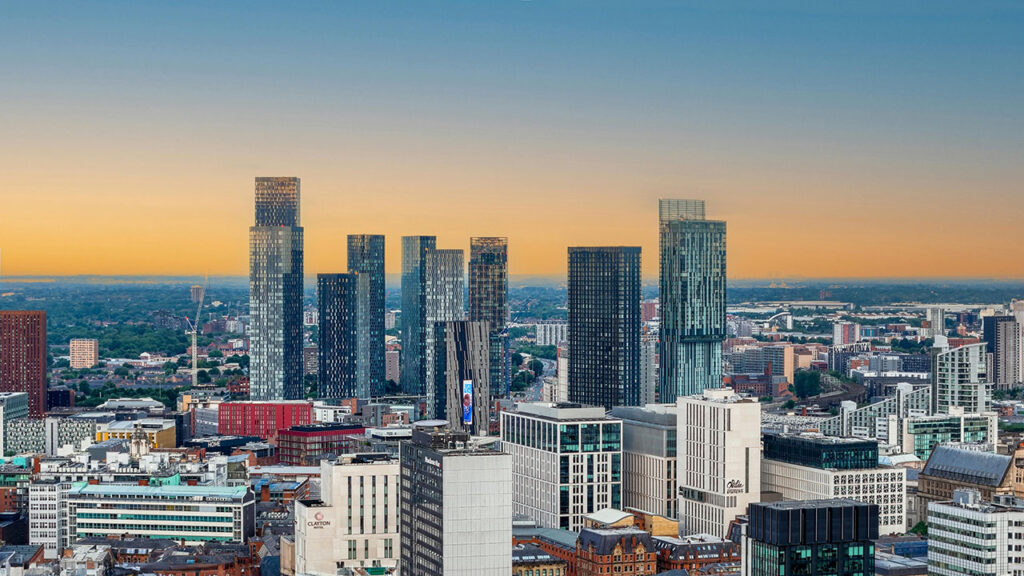
Expect the sky to look a bit hazy, and you might notice sunrises and sunsets looking extra colourful. Dust particles scatter the light differently depending on their size, so it can really boost red and orange colours.
“The dust starts off high above the ground (up to 5 km/3 miles!) when it leaves Africa and then it gradually falls down through the atmosphere. If some of that dust makes it all the way down to ground level, air quality can take a hit, which isn’t great for anyone with breathing issues. You’ll maybe spot a fine layer of dust on cars, windows, and anything else left outside, too,” explains Dr Hugo Ricketts.
Visually, it’s definitely one of those “nature doing something weird but cool” moments.
How can we measure it?
“If the dust layer reaches the ground, this can show up as increased particulate matter (PM), but we can also measure the amount and composition using specialist scientific instruments such as aerosol particle sizers and imagers.
“If the dust layer is still high in the sky, we can measure it using a laser-based instrument, known as a lidar. It uses a laser beam pointing up into the atmosphere that reflects off any particles that might be there. Mostly lidars are used at airports for detecting clouds, but they can also be used to identify aerosol layers, such as the Saharan dust layer,” says Dr Hugo Ricketts.