
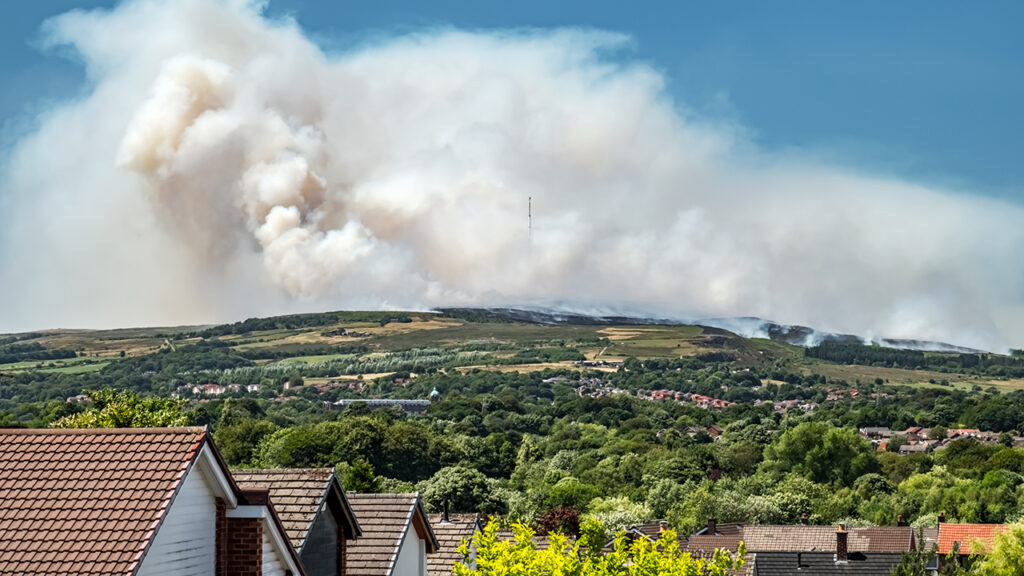
What do heatwaves mean for wildfires?
Heatwave temperatures remain high and wildfires are starting to burn, sparking conversations about how they are connected and the impacts of climate change.
What do heatwaves mean for wildfires?
Heatwaves are periods of abnormally hot weather usually lasting several days. Persistent high temperatures cause hot, dry conditions in which wildfires can spread.
Dr James Allan, senior scientist at NCAS and the University of Manchester, explains how heatwaves make wildfires more likely:
“Wildfires are more likely during heatwaves, particularly prolonged ones, because the vegetation gets dried out and so is easier to ignite and sustain a fire. In the case of moorland fires, peat within the soil can burn if the ground is dry enough, and this can be extremely difficult to extinguish once started.”
He describes the consequences of rainfall and plant growth:
“If a warm period in the spring or summer follows a period of rainfall, this can initially cause a lot of plant growth, so if this new growth subsequently dries out during hot weather, there can be more material to burn, also making a fire more intense and likely to sustain itself.”
And he goes on to talk about how wildfires begin:
“While heatwaves make wildfires more likely, there always has to be an ignition source. While fires can be started deliberately through arson, many are often accidental through activities such as barbecues or smoking. But even without any human activity, it is also possible for them to start naturally, such as through lightning strikes.”
Are heatwaves and wildfires harmful?
Heatwaves pose a risk to everyone’s health. Heatwaves are particularly hazardous to older people, children, people with pre-existing medical conditions, and those working long hours and in extreme conditions or exertive roles, e.g. factory or construction workers.
Wildfires have the potential to injure and kill people, and also cause extensive damage to ecosystems, property and livelihoods.
How does climate change affect heatwaves and wildfires?
Human-induced climate change means that summer weather is occurring on top of a warmer background climate.
With every degree of additional warming to the Earth’s climate, the frequency and intensity of heatwaves are projected to get worse in future. Soaring temperatures also lead to conditions that allow wildfires to spread quickly and far.
Climate change is often thought of as a problem for future generations, but the climate is already changing and we are already experiencing the impacts. Future impacts will be even more severe unless we develop much more effective strategies to prepare and protect people, and reduce our greenhouse gas emissions.