
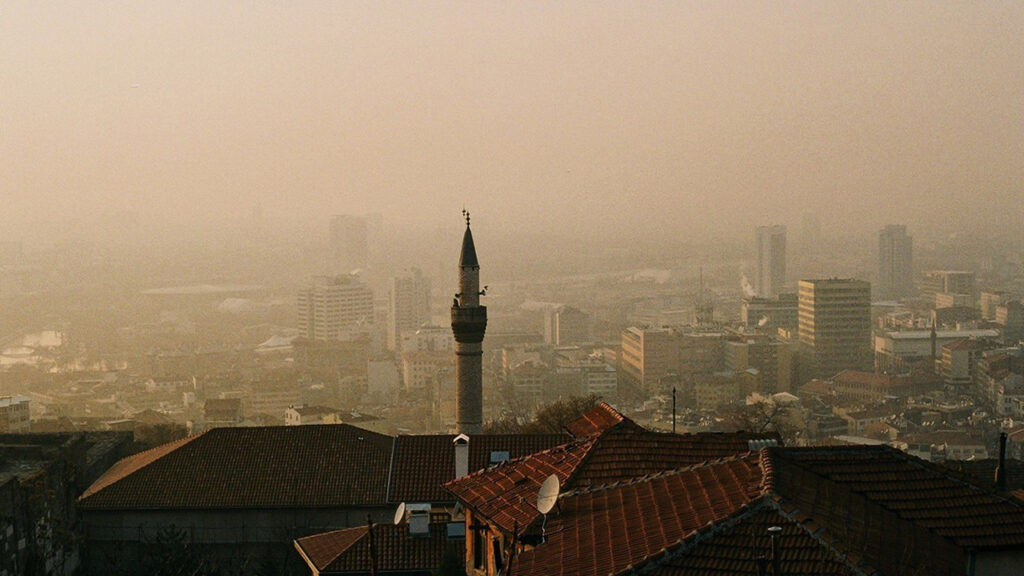
Desert dust pollution in Europe is rising, with risks for health and solar energy
The amount of desert dust from North Africa that is reaching Europe is on the rise, with implications for health and for solar energy. Research led by the Paul Scherrer Institute, involving the National Centre for Atmospheric Science, shows that this kind of airborne particulate matter pollution could be further exacerbated by climate change.
Thanks to strict regulations, particulate matter air pollution from human activity in transportation, households, and industry are decreasing in Europe – so the developing source of desert dust is becoming more significant.
To determine the level of desert dust pollution across Europe, over 50 researchers have collected data over the past 10 years from over 100 measuring stations and combined it with modelling and artificial intelligence (AI).
Rising desert dust pollution in southern and western Europe
Southern Europe is particularly affected – from Greece in the east through Italy to Spain and Portugal. The study also detected elevated dust levels in western France. Air masses from the Sahara often flow out into the Atlantic and then turn north again towards western Europe.
In southern Europe, the average concentration of desert dust is 5.3 micrograms per cubic metre of air – more than twice as high as in central and northern Europe, where an average of 2.1 micrograms was measured.
Overall, the amount of dust has increased by about half a microgram per cubic metre during the last decade, which corresponds to an increase of 10-25%.
To enable scientists to make longer-term comparisons, they used ice core data from Colle Gnifetti on the Swiss-Italian border. Dust particles trapped in the ice of the Alpine glacier over recent centuries reveal that the concentration of desert dust there has more than doubled over the last 150 years.
Through chemical analyses, the scientists can determine the origin of particulate matter found at ground level very accurately. Desert dust is easy to distinguish from other particulate matter, by using the concentration of aluminium in airborne particulate matter. This element is characteristic of dust particles transported from deserts. Particulate matter from urban construction sites is very high in calcium, and particles from traffic and household emissions contain mainly soot or carbon from the combustion of petroleum.
The role of drying deserts, atmospheric circulation changes, and climate change
According to the study, the rise in desert dust is driven by the continued drying of the Sahara in North Africa, alongside changes in atmospheric circulation that carry strong winds and dust into Europe.
The number of storms carrying desert dust to Europe from the Sahara has not actually increased, but they have become more intense over the 10 years studied, and as a result they are now transporting more dust to Europe than they did before.
Researchers suggest that human-caused climate change is leading to drier conditions in certain regions and the expansion of deserts, and could as a result be intensifying the desert dust pollution in Europe.
Forecasting desert dust to protect health and support the energy sector
Researchers used AI to improve existing physical models of particulate matter distribution. Traditional models are good at predicting major desert dust events but often miss smaller ones and have difficulty estimating ground-level dust concentrations.
Combining measurements from more than 100 locations with AI enabled the team to produce a reliable, health-focused map of dust particles across Europe. This dataset can now serve as a foundation for future studies on long-term health effects.
Unlike human-made particulate pollution, desert dust cannot be reduced through direct intervention. Over the long term, climate action may help limit the expansion of desert regions, but for now Europe must adapt to rising levels of desert dust.
One option would be to develop dust warning systems, similar to urban air quality alerts, to help vulnerable groups and people with respiratory conditions take precautions during high-dust periods. The energy sector could benefit too, as airborne dust can reduce solar panel efficiency by both blocking sunlight and accumulating on panel surfaces. Better forecasting would allow energy providers to offset these losses and help maintain grid stability.
Further information
Read the research paper published in Nature to learn more about the methods and results.
NCAS contributed UK measurement data to the study through the Natural Environment Research Council funded Integrated Research Observation System for Clean Air (OSCA) project, which is part of the UK Research and Innovation Clean Air Strategic Priorities Fund.