
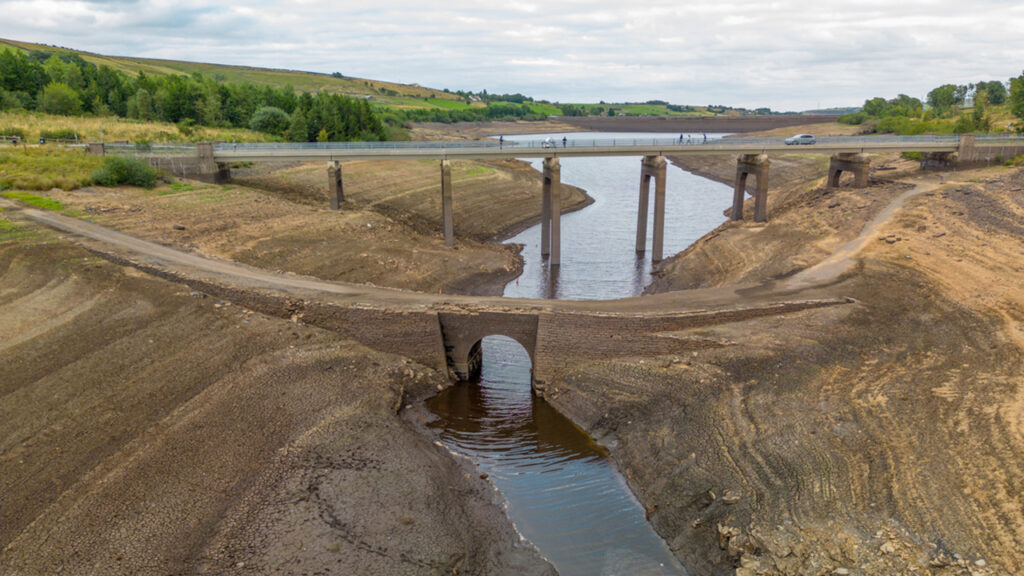
What does climate change mean for drought?
Climate change is reshaping drought in ways that go beyond simply having less rainfall. Research involving scientists from the National Centre for Atmospheric Science (NCAS) shows that rising temperatures are increasing evaporation, drying soils more quickly, and creating conditions where droughts can develop faster, become more severe, and affect new regions.
What is drought?
Drought represents a chain of impacts across the water cycle. It begins with meteorological drought, when a place receives less rainfall than normal. As the lack of rain continues and soils dry out, there becomes insufficient soil moisture to support crops and vegetation – this is known as agricultural or ecosystem drought. If these conditions are persistent, less water reaches streams, rivers, lakes, reservoirs, and groundwater stores – leading to hydrological drought. Drought typically means a prolonged shortage of rainfall, which creates a shortage in soil moisture, and finally a shortage of water in rivers and other bodies of water.
When a region is declared as in drought, or water scarcity, it is based on an assessment of current water levels and long-term weather forecasts. There may be restrictions on water use in certain areas, such as hosepipe bans, but these don’t always match the local drought conditions due to different plans to manage water between regions.
How is climate change affecting drought?
While some parts of the world are expected to see more rainfall overall with human-caused climate change, that does not necessarily reduce drought risk. Soil moisture, which crops depend on, is influenced by temperature, evaporation, runoff and vegetation changes. As the atmosphere warms, it can draw more moisture from the land, leaving soils drier even in wetter climates. Higher temperatures from ongoing warming cause more evaporation and worsen agricultural drought, which differs from a region that has a cooler climate but is experiencing meteorological drought.
NCAS research has identified emerging agricultural drought hotspots across Europe, North America, southern Africa and northern South America, where droughts are projected to become more frequent and intense with climate change. These changes pose growing risks to food production, water resources and ecosystems.
Scientists are also warning about a rise in “flash droughts” which develop rapidly over weeks, rather than months. These events can quickly reduce soil moisture, damage crops, increase wildfire risk and threaten livelihoods. Research suggests the frequency of agricultural flash droughts could more than double in parts of Europe, South America and Africa during this century with climate change.
For the UK, drought remains a recurring feature of the climate, but climate change is expected to make summers hotter and drier while increasing evaporation rates. This could raise the risk of summer droughts, placing greater pressure on water supplies, agriculture, biodiversity and public health.
As climate change increases the risk of severe drought, the risk of severe flooding also rises – so while the UK is experiencing prolonged dry conditions during the summer months, it is likely that many regions will also suffer from significant floods in the coming months and year. This is because when it rains, a warmer atmosphere leads to heavier rainfall.
Role of research in drought preparedness and climate resilience
Recent media coverage of dry conditions across the UK has highlighted the real-world impacts of prolonged periods of low rainfall, from stressed crops and falling reservoir levels to concerns over future water security. These challenges underline the importance of atmospheric science and NCAS’s research, which can provide the evidence needed to understand how climate change is influencing drought risk, helping improve forecasts, inform water management decisions, and strengthen preparedness and climate resilience in a warming world.