
Why is climate change causing drought and heavy rainfall?
Even though hot weather and drought can make it seem as though an area is becoming drier, climate change can also increase the likelihood of heavy rainfall and flooding.
Some places around the world may experience long periods of dry, hot weather followed by intense rainfall. Why?
As the Earth’s atmosphere warms with human-driven climate change, it can hold more moisture. This means that when rain does occur, there is more water available in the atmosphere, allowing storms to produce heavier downpours.
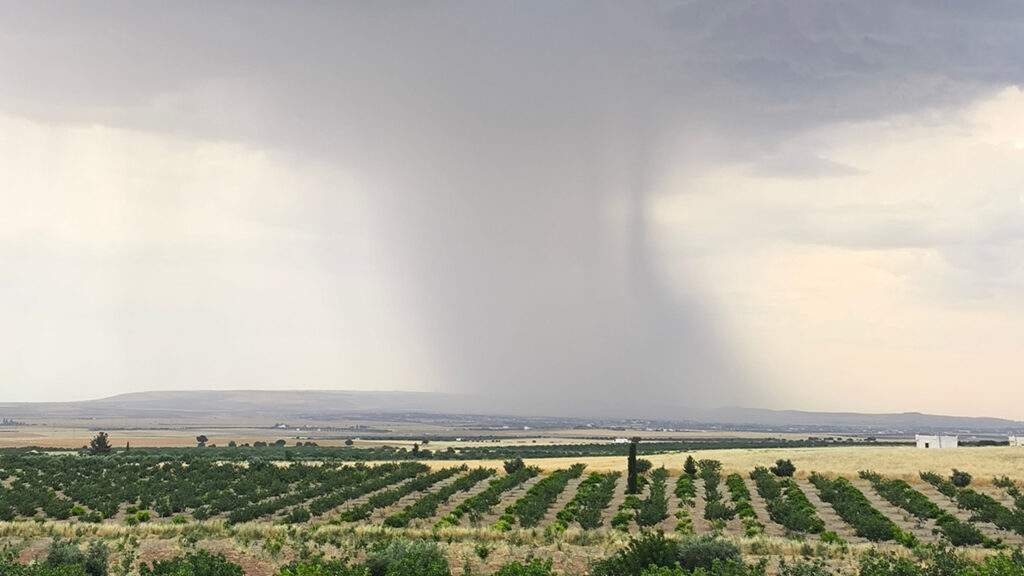
Intense rainfall can also occur during hot weather because, as the land surface heats up, it warms the air near the ground. This causes the warm air to rapidly rise, known as convection. As the air rises and cools, water vapour condenses into clouds, which can lead to heavy rainfall. A warmer atmosphere becomes ‘thirstier’ for water, driving evapotranspiration and making the ground drier and droughts worse if there is a prolonged shortage of water.
Drought conditions can actually make the impacts of heavy rainfall worse. During prolonged dry spells, soil can become hard and compacted, reducing its ability to absorb water. When heavy rain eventually falls, more of the water runs across the surface rather than soaking into the ground, increasing the risk of flooding.
Does climate change affect every region, or each season, in the same way?
No – while some areas may become hotter and drier overall, others are expected to receive more rainfall. For example, the Mediterranean is projected to get drier, while India is projected to get wetter. Even in places that experience drought, rainfall is often becoming more extreme, with wetter wet periods and drier dry periods.
Climate change impacts on atmospheric circulation can also affect how much rain different regions receive. The North Atlantic storm track, which is most active in winter, is expected to intensify with climate change, bringing more powerful storms and more rainfall to the UK in winter. In contrast, UK summers are projected to become drier overall, although rainfall is likely to be more intense when it does occur.
In simple terms, climate change is increasing weather extremes. This means that a location can experience both severe drought and severe flooding – sometimes within the same month, season, or year.