
Fossil CO2 emissions decline in 2026, finds Global Carbon Budget
Global carbon emissions from fossil fuels are projected to decrease by 0.4% in 2026 – driven by expansion of solar and wind power and the Iran conflict – according to new research by the Global Carbon Project.
The 2026 Global Carbon Budget projects 38.2 billion tonnes of fossil carbon dioxide (CO2) emissions this year. Emissions from oil are projected to decrease by 1.9% – likely a short-term response to the energy shock triggered by the Iran conflict.
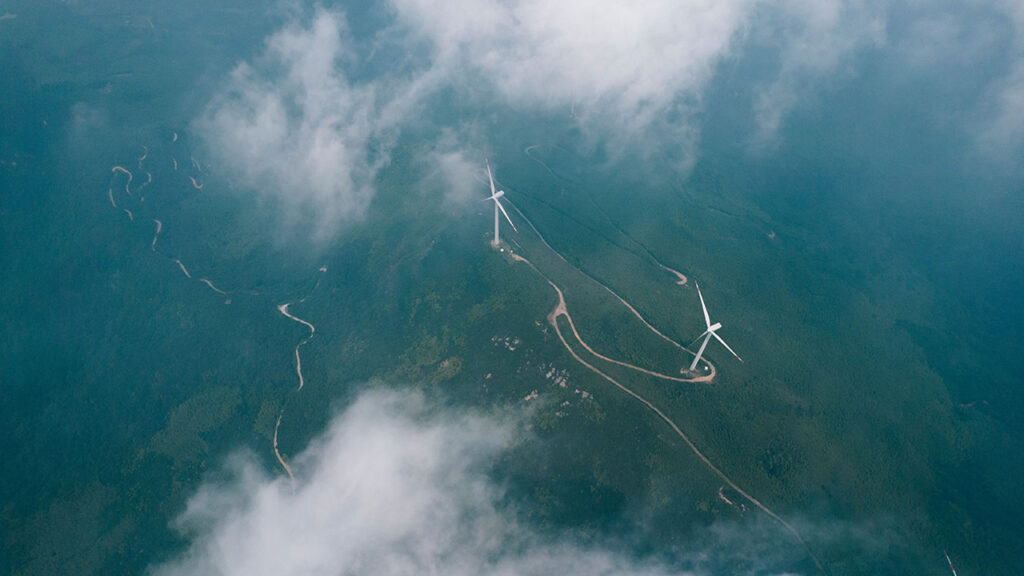
While global energy demand continues to rise, two thirds of the increase is being met by increased solar and wind power and electric vehicles.
However, the report finds that clean energy growth is not yet fast enough for a durable decline in global fossil CO2 emissions.
With emissions from land-use change (such as deforestation) projected to increase slightly this year, total CO2 emissions are projected to be 43.3 billion tonnes in 2026 – up from 42.8 billion tonnes last year.
The remaining carbon budget (the amount of CO2 that can be emitted before warming reaches 1.5°C above pre-industrial levels) is now 150 billion tonnes – equivalent to less than four years of emissions at the current rate.
With CO2 still rapidly accumulating in the atmosphere, the dangerous impacts of climate change continue to increase.
The report also assesses natural “sinks” (absorption of CO2 by land and ocean). It finds that the land sink returned to former levels after a severe weakening during the 2023-24
El Niño weather pattern. However, the powerful 2026 El Niño is expected to have a significant impact in the coming year.
Dr Patrick McGuire, a computational scientist at the National Centre for Atmospheric Science and University of Reading, participated in the Global Carbon Budget for a fourth consecutive year and for a sixth time in total.
He evaluated and compared the various computer models that simulate how land ecosystems absorb and release carbon. Dr Patrick McGuire said: “A slight fall in fossil CO2 emissions this year is welcome, but it is not yet the turning point the world needs. The land models we evaluated show forests and soils soaking up more carbon since the last El Niño, but climate change is already cutting that uptake by almost a fifth. The large El Niño now developing is expected to weaken it again next year, as peatland fires surge in Southeast Asia. With less than four years of emissions left before 1.5°C, we cannot rely on nature to save us. Clean energy must expand faster, and deforestation must end.”
The Global Carbon Budget project involves more than 140 international scientists and tracks the trends in global carbon emissions and sinks, and is a key measure of progress towards the goals of the Paris Agreement.
The 2026 edition (the 21st annual report) was published in the journal Earth System Science Data on 10 November 2026.