
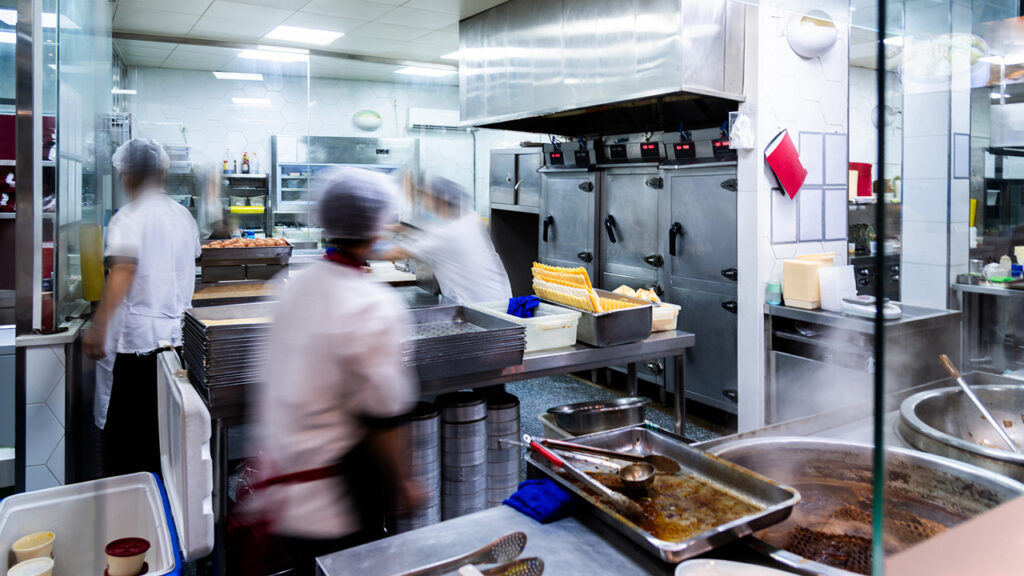
What’s cooking? Kitchen emissions now rival traffic as a major source of urban air pollution
New research shows that cooking emissions have become a major source of air pollution in central London and Beijing, often exceeding emissions from vehicle exhausts during parts of the day.
The international study, involving air quality researchers from the National Centre for Atmospheric Science, used advanced atmospheric measurements to identify and quantify sources of fine airborne particles above London – from the BT Tower Observatory, Beijing and Delhi.
Researchers found that while traffic and other combustion sources remained dominant in Delhi, cooking emissions accounted for up to 83% of midday and 87% of evening primary fine particle emissions in London, with similarly high contributions in Beijing.
The findings highlight the success of decades of policies to reduce pollution from vehicle exhausts. As emissions from road transport have fallen, other sources have become more prominent, including emissions from restaurants and commercial kitchens. This does not mean traffic is no longer a concern – as pollution from tyre, brake and road wear remains important.
Vehicle exhausts have long been viewed as the dominant source of urban particulate pollution, but these measurements show that in central London and Beijing that is no longer the case for fine particle emissions. Policies targeting vehicle exhausts have been highly effective, and as a result, cooking emissions are now a surprisingly important and largely overlooked part of the urban pollution mix. Everyday activities in homes, restaurants, and commercial kitchens can release large amounts of fine particulate matter into the atmosphere. These findings highlight an opportunity for policymakers and city planners to achieve further improvements in air quality through measures such as better filtration systems, helping to reduce pollution exposure for people living and working in urban areas.
– Professor James Allan, air pollution researcher at the National Centre for Atmospheric Science and University of Manchester
The study was led by the UK Centre for Ecology & Hydrology, and funded by the Natural Environment Research Council and international partners in China and India.
The research involved Aerodyne Research Inc., Chinese Academy of Sciences, Colorado State University, CSIR National Physical Laboratory, Indian Institute of Technology Roorkee, Indira Gandhi Delhi Technical University for Women, National Centre for Atmospheric Science, University of Chester, University of Colorado Boulder, University of Manchester, and Zhejiang University.