
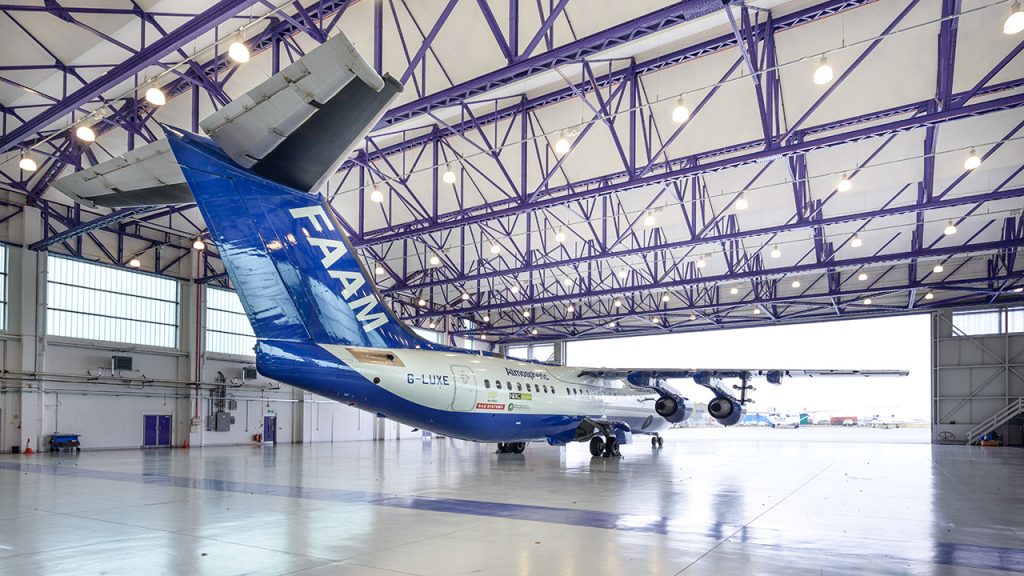
Closure of the FAAM Airborne Laboratory
Following the withdrawal of funding by UKRI-NERC, announced on Thursday 26 February 2026, the National Centre for Atmospheric Science can confirm that the FAAM Airborne Laboratory will cease operations at the end of this financial year.
UKRI have been the custodians of UK airborne science and monitoring since 2014, but the closure marks the end of over 100 years of UK leadership in this field.
We will work closely with UKRI, NERC, our host institutions, delivery partners, facility users, and staff to decommission the research aircraft and manage the transition responsibly. Our immediate priority is supporting affected staff and the wider UK atmospheric science community.
Further updates will be provided as the closure process moves forward.
For enquiries about the funding decision please contact UKRI.
For media enquiries please contact press@ukri.org or comms@ncas.ac.uk.
For enquiries about the Mid-Life Upgrade Programme please contact mlu@faam.ac.uk.
For enquiries about FAAM Airborne Laboratory operations please contact faam@ncas.ac.uk.
FAQs
Why is the FAAM Airborne Laboratory closing?
The decision follows the withdrawal of funding by UKRI-NERC – announced on Thursday 26 February 2026. Without this funding, key contracts will end and continued operation is not feasible. The FAAM Airborne Laboratory will cease to operate at the end of this financial year. NCAS is now implementing a closure process aligned with funder requirements, contract obligations, and HR processes.
Who made the decision and when?
The closure decision was made by UKRI-NERC. The National Centre for Atmospheric Science was notified of this decision at 13.00 on Thursday 26 February 2026.
How many staff are affected?
University of Leeds HR is leading a consultation process with all affected colleagues. Numbers can only be confirmed once individual consultations and assessments conclude.
What support is available for affected staff?
Affected colleagues have access to:
- individual HR consultations
- redeployment opportunities where applicable
- wellbeing and mental health support
- union representation and advice for members
- career transition resources
What happens to planned science campaigns involving FAAM Airborne Laboratory?
NCAS is working closely with UKRI-NERC, our partners, and staff. Some activities will be wound down, and others may transition to alternative facilities or partners. Further details will be provided at each consultation and operational stage.
How long will the closure process take?
Timelines depend on:
- HR consultation
- Decommissioning of infrastructure and equipment
- Agreement with UKRI-NERC on transition plans
Indicative schedules will be shared as soon as they are confirmed.
Will this affect other NCAS sites, facilities, or research activities?
This decision relates specifically to this facility and its funding context. Other NCAS sites and national capability functions continue, and we remain in communication with UKRI-NERC about future funding and strategic planning.
Was this situation foreseen?
Funding for NCAS, including FAAM, is subject to periodic review. In this case, withdrawal of funding means continued operation of the FAAM Airborne Laboratory is no longer viable.
What does this mean for public money?
All NCAS and funder investments have supported nationally important atmospheric science and capability. We are committed to responsible stewardship of public funds, and that continues throughout the closure process. Where possible, we will ensure infrastructure, equipment, and data is redistributed, repurposed, or stored.
Will the FAAM Airborne Laboratory ever reopen or be replaced?
We cannot speculate on future funding decisions or proposals. Any long‑term capability planning sits with UKRI-NERC.
How will affected people and partner organisations be informed?
Staff and partners are being briefed directly. Public updates will be shared via NCAS channels.
Where can staff go with questions or concerns?
Please contact UKRI with questions about the funding decision, future capability, and decommissioning process: press@ukri.org
Other enquiries can go to:
John Eager, NCAS Operations Director.
Lisa Banton, NCAS Head of Equality, Diversity, Inclusion and Workforce Development