
Scientists probe how sustainable aviation fuel affects air quality and climate
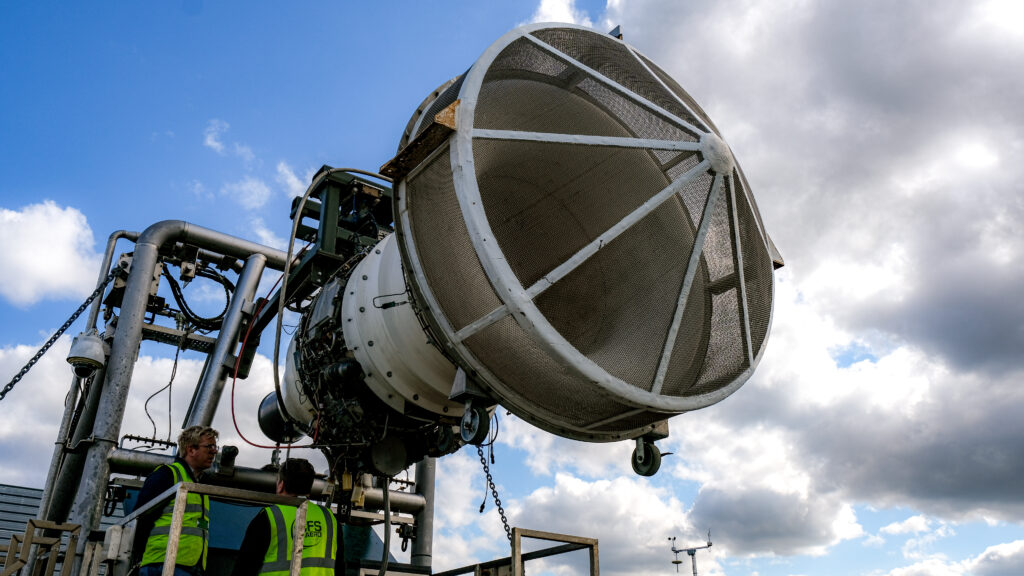
Scientists are looking at how pollutants from aircraft could change by burning sustainable aviation fuel, by performing tests on a static engine stand. This research marks a major step forward in understanding how different aviation fuels change the impact of flying on air quality and the climate.
We spoke to the research team:
We recently performed engine tests on a static engine stand, and used specialist sampling probes to monitor non-CO2 emissions from the jet engine running on different fuels.
This is part of a pioneering project called GRIM-SAF (GRound-Based and Inflight Measurements), which is investigating how sustainable aviation fuel (SAF) could reduce aircraft emissions of soot and volatile particles, and a range of gases including nitrogen oxides, often referred to as the non-carbon dioxide (CO2) emissions.
– Dr Ruth Purvis, research scientist at the National Centre for Atmospheric Science and University of York
“We often talk about the environmental impact of air travel in terms of the carbon dioxide emissions produced, but this is just one part of the picture. Effective Radiative Forcing (ERF) is a measure of a particular pollutant or sector’s impact on climate. Non-CO2 emissions can contribute up to 66% of aviation’s ERF, compared with 33% from CO2. Additionally, it’s important to understand what effects they have on our local air quality around airports,” explains Dr Paul I Williams, senior research scientist at the National Centre for Atmospheric Science and University of Manchester and project lead for GRIM-SAF.
Emissions from aircraft aren’t just limited to the skies; ultrafine particles have been detected many kilometres downwind of airports at ground level, especially major airports that see heavy air traffic. Increased particulate matter (PM) concentrations in the air is a sign of poor air quality, which can be harmful for people living in these locations.
Burning SAF in jet engines still generates air pollution that affects public health, particularly on the ground during idle and taxi when fuel is being burned somewhat inefficiently. If aviation volumes increase in the UK, fuelled by SAF, there will be noise and air quality impacts that need considering alongside greenhouse gas emissions.
– Professor Ally Lewis, research scientist at the National Centre for Atmospheric Science and University of York
“This amazing experiment, funded by NERC and the Department for Transport, is making new measurements that will shed some light on the air quality impacts of burning SAF in jet engines. It was coordinated by Dr Andrew Crayford and Dr Eliot Durand at Cardiff University, as well as Dr Paul Williams and Dr Ruth Purvis at the National Centre for Atmospheric Science.
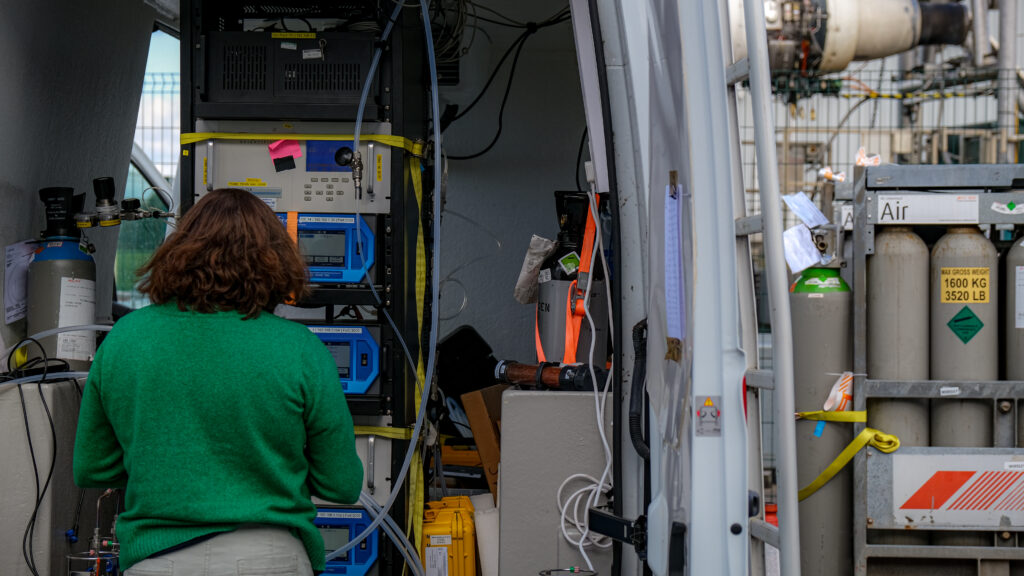
“Some newly built instruments have been used, including a 60 second cycle-time Gas Chromatography-Mass Spectrometer for Volatile Organic Compounds designed by Dr Steve Andrews, and a super high precision sulfur dioxide monitor from Peter Edwards’ group – both developed at the University of York.
“Sulfur dioxide and black soot emissions will likely be lower when adding SAF, but it’s not yet clear what will happen to NOx or other less talked about air pollutants such as benzene, formaldehyde or ultrafine particles,” says Professor Ally Lewis, research scientist at the National Centre for Atmospheric Science and University of York.
Nitrogen oxides, known as NOx, are significant contributors to air pollution, impacting air quality and affecting our climate. The majority of NOx emissions presently come from cars and HGVs, but as electric cars become more widespread the aviation sector will become responsible for a larger share of this.
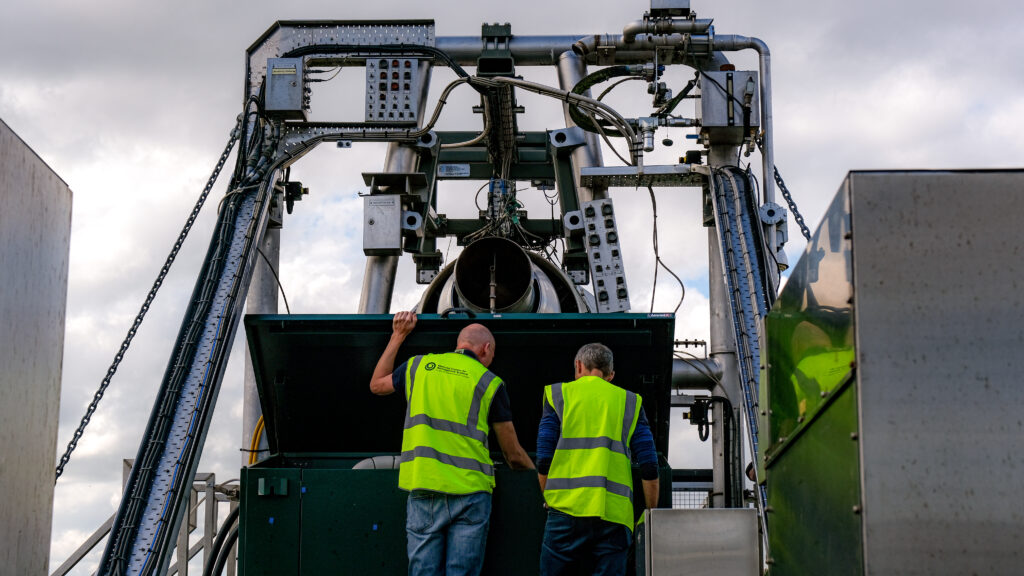
Acknowledgements: The GRIM-SAF (GRound-Based and Inflight Measurements) team includes the National Centre for Atmospheric Science, Cardiff University, University of Manchester, University of York, Manchester Metropolitan University, Cranfield University, and Rolls Royce. The GRIM-SAF team would like to thank the support given by CFS Aero at Hawarden Airport in providing a ground based site.