
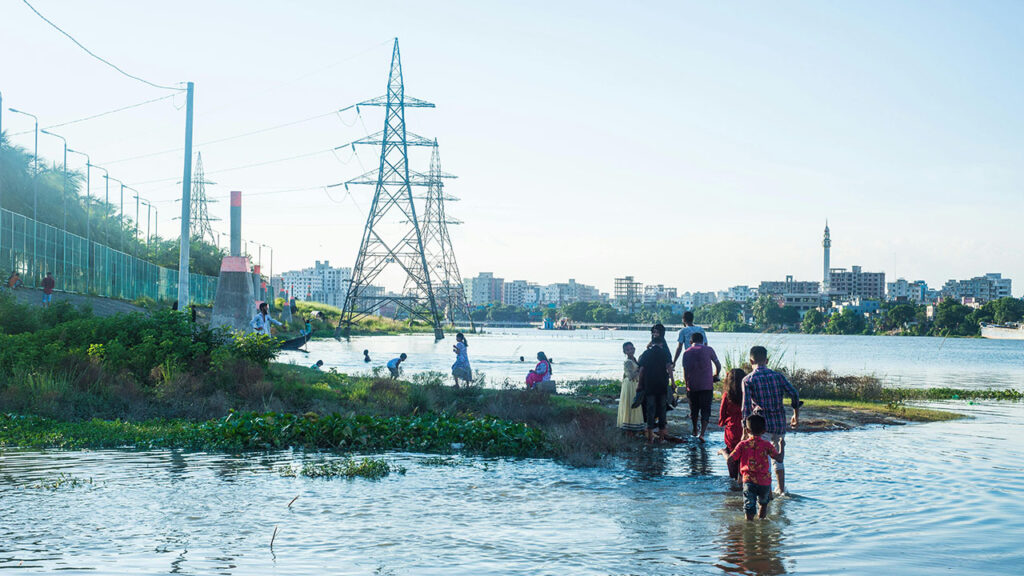
Tropical cyclones pose major risks to energy security in Bangladesh
Landfalling tropical cyclones can cause widespread disruption to electricity supply in Bangladesh, highlighting urgent challenges for climate resilience and clean energy development in one of the world’s most climate‑vulnerable regions.
Researchers from NCAS, the University of Reading, and Newcastle University have analysed a decade of electricity demand data alongside meteorological and hazard records, producing one of the most detailed assessments to date of how extreme weather affects national power systems.
Their new study shows that tropical cyclones reduce Bangladesh’s electricity supply by an average of 20%, with even more severe impacts in coastal areas.
How do tropical cyclones put energy systems at risk?
Bangladesh’s rapidly expanding electricity network is increasingly exposed to extreme weather. When tropical cyclones make landfall, electricity supply in coastal regions can fall by up to 38%, and in extreme cases over 90% – consistent with impacts from wind damage, flooding of substations, and intense rainfall.
Weaker storm systems also disrupt supply, though less severely, reducing electricity availability by about 8%. These localised impacts are associated with wider disruptions even in inland areas.
Efforts to improve resilience through importing electricity from neighbouring regions, such as India, can offer only limited protection. Because cyclones can affect multiple areas at the same time, such as Bangladesh and West Bengal, supply from across borders may fail simultaneously. This highlights the need for stronger local resilience and more diversified energy systems, rather than heavy reliance on interconnected grids during crises.
With climate change expected to increase the risks from cyclones, storm surges, and coastal flooding, strengthening infrastructure – such as reinforcing transmission lines and protecting substations – will be critical to reducing future risks.
How did scientists assess how extreme weather affects national power systems?
The researchers combined two main datasets to examine how cyclones affect electricity supply in Bangladesh. They analysed daily electricity data from nine power-planning zones between 2015 and 2025 to track how much power was delivered to users.
This was matched with meteorological and hazard data, including cyclone tracks, wind speeds, rainfall, and storm surge, derived from satellite observations and atmospheric reanalysis.
Using an event‑based approach, the team studied 14 named cyclones and 13 weaker storm systems. They compared electricity supply before, during, and after each event to isolate storm‑related impacts and measure deviations from normal supply levels.
By combining real electricity data with detailed storm information, our study shows that tropical cyclones are associated with major shortfalls in electricity delivered to users across Bangladesh. It also shows that current backup strategies, such as importing electricity, may not work in the most extreme events, which highlights the need for more resilient energy systems in the future.
– Dr Kieran Hunt, NCAS research scientist and Associate Professor in Tropical Meteorology and AI at the University of Reading.
What are the implications for clean energy and development?
Reliable electricity underpins economic growth, industry, and essential services. Outages related to tropical cyclones can interrupt supply chains, manufacturing, and healthcare delivery.
For Bangladesh and other rapidly developing economies, investing in climate‑resilient infrastructure is therefore critical to supporting both sustainable development and energy transitions. And without careful design, both fossil fuel infrastructure and renewable generation – such as wind and solar – will remain vulnerable to disruption.
Our work underscores the need to embed climate risk into energy planning – from diversifying generation sources and improving grid flexibility to strengthening infrastructure and regional cooperation. Building resilient energy systems will be key to securing reliable, low-carbon power in a future shaped by more extreme weather.
– Dr Kieran Hunt, NCAS research scientist and Associate Professor in Tropical Meteorology and AI at the University of Reading.