
Unlocking answers to climate change, air pollution, and high-risk weather in 2025
Unprecedented global temperatures, extreme weather events, and air pollution have featured in the headlines and on social media this year, as they continue to affect people living in the UK and around the world.
At the National Centre for Atmospheric Science, we know that understanding the atmosphere has never mattered more. As 2025 draws to a close, we’ve been looking back at our science stories from this year. This article highlights some of the contributions our community of staff have made towards atmospheric science.
January – Discovering disparity in England’s air pollution emissions
At the start of the year, we reported that minoritised ethnic groups, often living in urban centres or near major roads, face disproportionately high levels of harmful emissions of air pollutants.
Air quality researchers combined census data on socioeconomic deprivation and detailed information on population ethnicity at fine scales with air pollution emissions data in England. They identified that all 24 minoritised ethnic groups studied experienced higher than average air pollution emissions than socio-economically matched populations in the majority ‘White: English, Welsh, Scottish, Northern Irish or British‘ ethnic group.
February – Identifying critical climate tipping points
In February, two teams set out to measure and model climate tippings points – where rapid and abrupt changes are irreversible on societal timescales.
Scientists are especially concerned about the rapid melting of the Greenland Ice Sheet and the collapse of the North Atlantic subpolar gyre. Both could lead to huge disruptions worldwide, such as drastic weather changes in Europe and rising sea levels globally.
The GAMB2LE project will build a pioneering automated and mobile polar observatory, which will focus on collecting continuous high-resolution data about the atmosphere-ice interface on the Greenland Ice Sheet.
The PROMOTE project will create a new generation of Earth System models to generate simulations of plausible tipping points, and provide recommendations for targeted observational networks. The models will be improved to better represent ice sheets and freshwater export from ice sheets into the ocean, as well as ocean eddies and mixing of water masses.
March – Understanding mountainous terrains to improve the accuracy of weather forecasts
Mountains have a big impact on local weather, regional weather patterns, and airflow in the lower and upper atmosphere.
In the spring, the NCAS-led part of the TEAMx programme set out to address the shortage of mountain weather data. Their focus over the year would be the Alps, a mountain range that stretches across 8 countries in Europe.
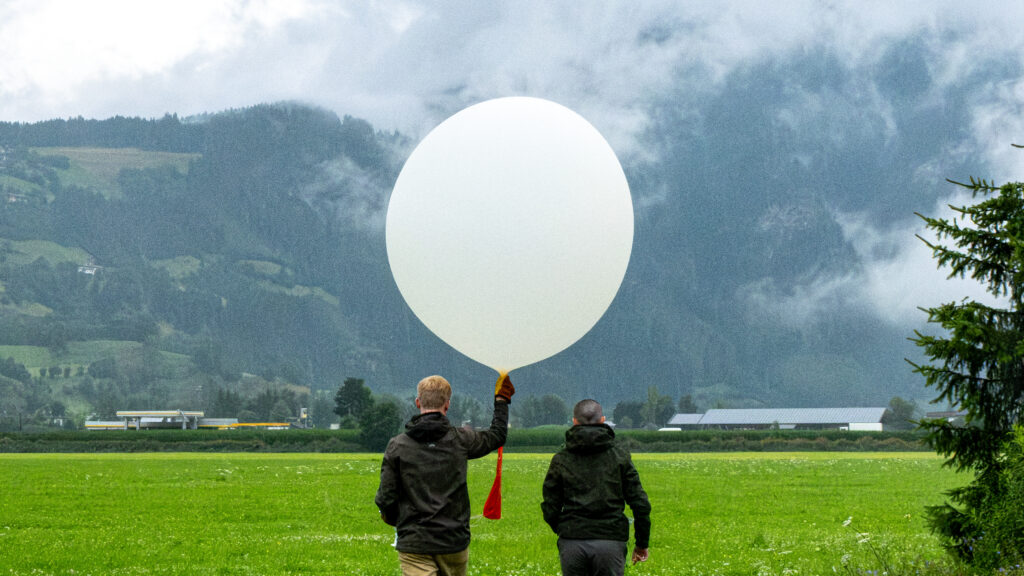
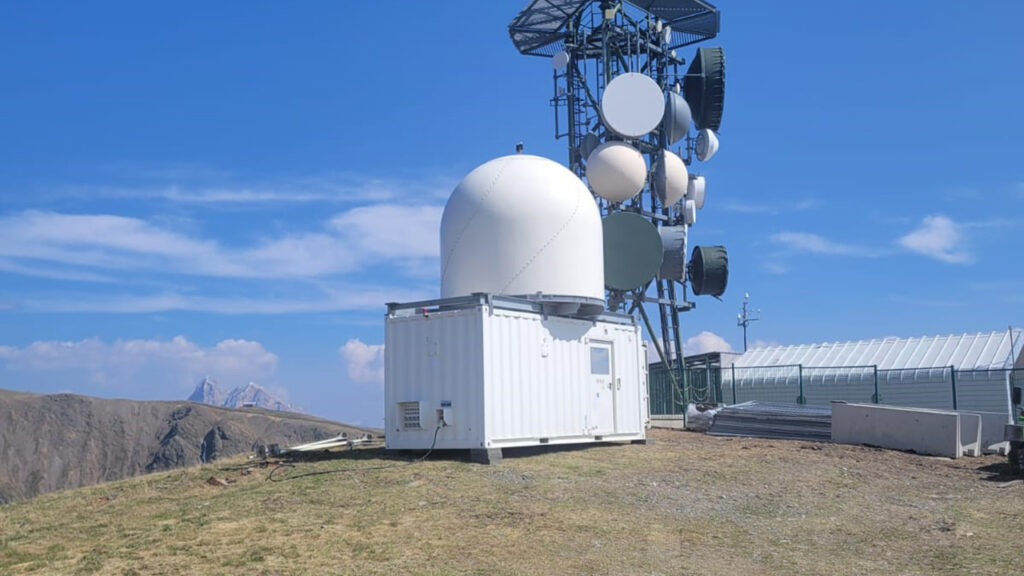
Joining an international team of 100+ fieldwork scientists, they began to develop and deploy bespoke research-grade instrumentation into the alpine environment – launching paired radiosondes, installing a new X-band weather radar on a mountain crest, and operating our research aircraft.
April – Integrating satellite and in-situ observations with model data
In April, we introduced VISION – a cutting-edge tool which is revolutionising atmospheric science by seamlessly integrating satellite and in-situ observations with model data, enabling researchers to create a digital twin of the FAAM Airborne Laboratory’s research aircraft, enhance model accuracy, and drive climate insights with unprecedented precision.
VISION will have real-world benefits both to the science produced by the FAAM Airborne Laboratory, but also to the carbon emissions and flight costs involved with collecting data.
May – UK’s first sustainable aviation fuel emissions “chase” experiment
In May, we investigated how pollutants from aircraft could be reduced by using sustainable aviation fuel.
Our FAAM Airborne Laboratory’s atmospheric research aircraft “chased” Cranfield University’s National Flying Laboratory Centre research aircraft to measure the emissions it produces during flight. With one trailing the other to sample its emissions, the scientists were able to compare the pollutants produced by sustainable aviation fuel and traditional jet fuel. This is a major step forward in understanding how different aviation fuels change the impact of flying on air quality and the climate.
June – Weather and climate forecasting for renewable energy
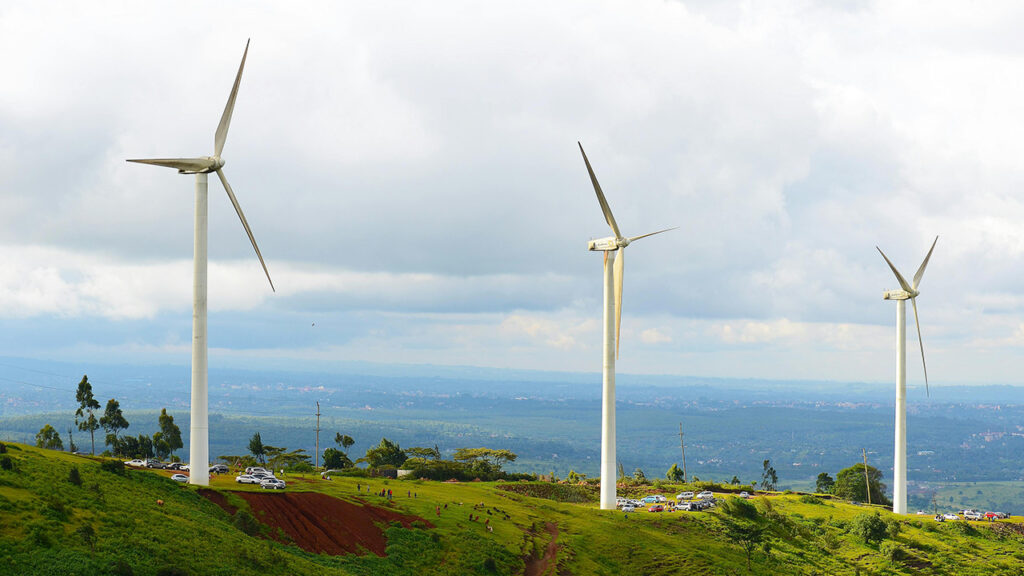
This summer we highlighted how researchers are using weather and climate forecasting to help renewable energy in East Africa.
As East Africa transitions toward a low-carbon future, renewable energy sources such as wind, solar, and hydropower are playing an increasingly critical role in national development strategies. These sources of energy are inherently weather-dependent, making power systems vulnerable to climate variability, low winds, increased cloud cover, and droughts.
A new collaborative research initiative, known as POWER-Kenya, is investigating how sub-seasonal weather forecasts (typically 2 to 4 weeks ahead) can inform Kenya’s strategy for a resilient renewable energy supply.
July – From clean air to a warming planet
In July, a new international study, co-authored by the National Centre for Atmospheric Science, found that recent monumental efforts to reduce air pollution in East Asia may have inadvertently contributed to a noticeable acceleration in global warming since 2010.
For decades, air pollution – particularly sulfate aerosols from burning fossil fuels – has helped cool the Earth’s surface by reflecting sunlight back into space. The Intergovernmental Panel on Climate Change estimated in 2021 that aerosols had a net cooling effect of about 0.4°C globally.
But, starting in the early 2010s, East Asia began implementing strict air quality policies that are vital for human health. China, where air pollution is responsible for approximately one million premature deaths each year, has led the change. These efforts have resulted in a dramatic 75% reduction in sulphur dioxide emissions over the past 15 years.
The relatively quick clean-up of air pollution in East Asia, although it reduces the cooling mask, is both necessary and long overdue to protect human health. And as aerosol levels stabilise, the pace of warming is expected to return to the longer-term trend driven by greenhouse gases.
August – Low emission hydrogen engines could cut air pollution from construction
In August, we reported on a promising innovation that could offer a practical and impactful route to reducing air pollution from the construction industry, and improving air quality in cities.
The hydrogen internal combustion engine, also known as H2ICE, can be used in heavy-duty and off-grid environments. Emissions of nitrogen oxides from a 4-cylinder 55kW spark ignition hydrogen engine using lean-burn combustion were found to be 40 – 500 times lower than those from state-of-the-art diesel engines.
H2ICE may be particularly beneficial for densely populated urban areas and major infrastructure sites where air quality effects are considered as part of planning approvals.
September – Forecasting monsoon rainfall in a changing climate
At the end of summer and prompted by the disastrous monsoon season in South Asia, we highlighted how researchers are using forecast-based attribution to provide insights into how climate change may have influenced rainfall patterns over Pakistan.
Three years ago, Pakistan experienced devastating floods caused by abnormally heavy monsoon rainfall from June to August. The 2022 disaster affected millions of people, left thousands homeless, and tragically claimed more than 1,500 lives. Over two million acres of crops were destroyed, and more than 700,000 livestock were lost, creating long-lasting humanitarian and economic impacts.
Months before the floods began, seasonal forecasts from several weather models had indicated a heightened risk of unusually heavy rainfall across Pakistan. This raised the possibility of using forecasts not just to predict events, but also to assess the impact of climate change on them.
The results of the forecast-based attribution were not straightforward, but they show that climate change is one piece of the puzzle.
October – Weather radar reveal patterns in UK insect populations
In the autumn, an insect monitoring study using weather radar data was in the spotlight. Traditionally used to track rainfall and storms, weather radar have been used to help researchers monitor the daily movements and long-term abundance of flying and floating insects.
Despite growing concern about insect declines due to climate change, land use, and light pollution, it’s been difficult to track large-scale trends – until now.
The team repurposed data from the UK’s network of weather surveillance radars. By measuring how radar signals bounce off airborne objects and using dual-polarisation technology to tell insects apart from raindrops, the scientists were able to estimate the number of insects flying between 500 and 700 metres above ground.
Their results show an average of 11.2 trillion insects in the air during daytime hours and just over 5 trillion at night during the main flying seasons. Insect abundance was higher in areas with woodlands, grasslands, and even urban areas – but dropped in intensively farmed regions and where artificial lighting was high. And while daytime insect numbers remain relatively stable or even increased in southern regions, the researchers found that nighttime-airborne insects have declined overall – especially in the far north.
November – Major drop in sulfur emissions from ships
In November, we confirmed that recent global regulations have significantly reduced sulfur emissions from ships, helping to improve air quality in coastal regions.
Using aircraft-based measurements for the first time, alongside ground-based instruments, the research team measured sulfur dioxide and nitrogen oxides emitted by ships in the North-East Atlantic and European coastal waters.
The team found that the average sulfur content in ship fuel dropped nearly tenfold in open ocean areas following the International Maritime Organization’s 2020 regulation.

December – High levels of air pollution in homes
At the end of the year, we shared an important study that discovered harmful levels of indoor air pollution in homes, during one of the largest and most detailed indoor air quality investigations to take place in the UK – led by the INGENIOUS project team.
High concentrations of fine particulate matter, known as PM2.5, were found in some of the homes of 309 families participating in the long-term Born in Bradford health study – with recommended World Health Organisation guidelines exceeded on 41% of all monitored days. Families from deprived areas and ethnic minority backgrounds were found to be facing the highest levels of exposure.
The air quality inside our homes is often far poorer than we assume, and some communities bear a greater burden than others. Because people spend so much of their lives indoors, these unseen pollutants could pose a serious and often underestimated health risk.
Atmospheric Science in 2026
We’re looking forward to 2026 and continuing our research to understand our atmosphere, how it is changing, and how it impacts our global environment, our health, and our prosperity.
To keep up to date with our latest science stories, opportunities to work with us, training courses and events, you can sign up to receive our monthly Circulation newsletter.
For media enquiries, please contact comms@ncas.ac.uk.