
Commercial partnerships
The National Centre for Atmospheric Science offers a unique opportunity for commercial partners to access world-leading atmospheric science.
Our work brings together expertise from across scientific disciplines and sectors, spanning all scales from quantifying chemical reactions in laboratories to global pollution, from detecting the smallest cloud droplets to weather systems, and from local weather impacts to modelling climate change.
We also manage services that support the collection and use of scientific data for a range of applications: the Atmospheric Measurement & Observation Facility, the Centre for Environment Data Analysis and the Computational Modelling Services.
We know that partnerships are beneficial to delivering effective solutions to many environmental and societal challenges. Our Science Strategy outlines our ambitions and approach for applying our expertise, and the ways in which we would like to work closely with others.
Business engagement and industry experience
Learn about how our experience spans across sectors and applications, from hydrogen technology and automated drones, to satellite calibration and insured losses.
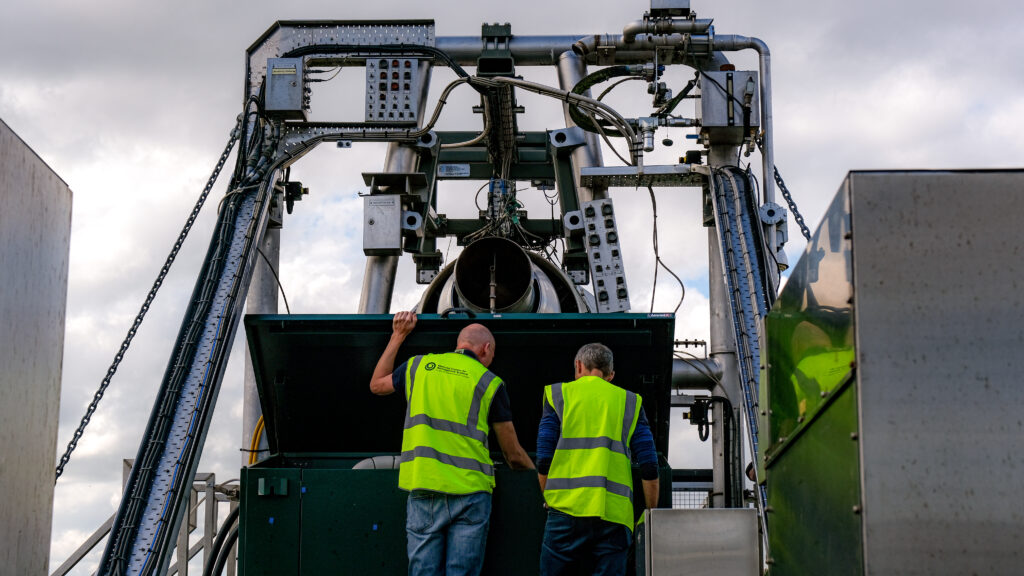
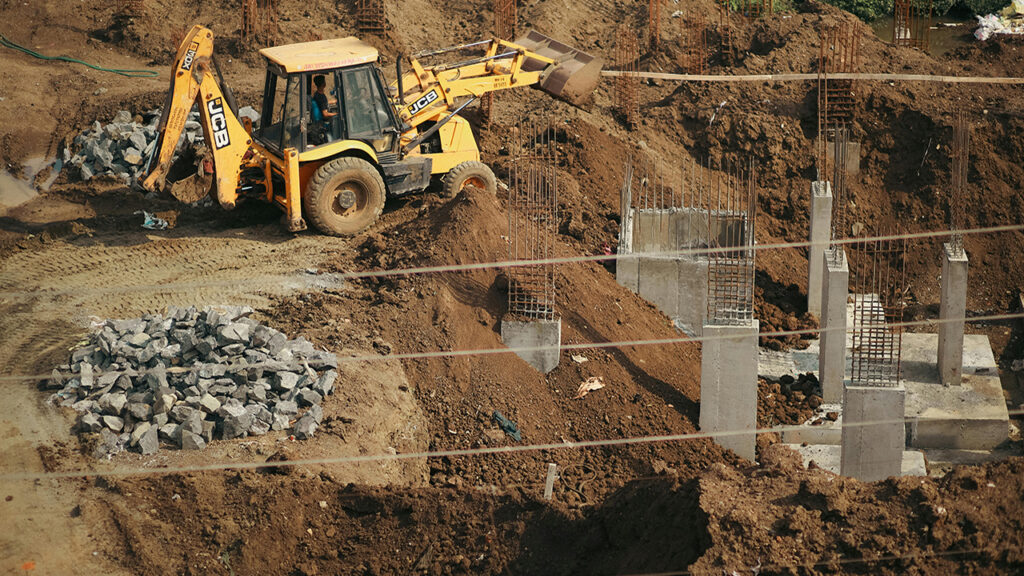
Hydrogen-powered engines to revolutionise air quality around construction sites
Non-road mobile machinery used for construction remains an important source of air pollution in cities.
In partnership with JCB, NCAS researchers independently verified exhaust emissions from hydrogen and diesel engines.
NCAS found emissions of nitrogen oxides from lean-burn hydrogen engines to be 40 – 500 times lower than those from state-of-the-art diesel engines. JCB has invested more than £100M in the development of hydrogen technology for construction equipment.
As the UK works toward its net zero goals, low-emission hydrogen combustion engines offer a practical and impactful route to reducing construction-related air pollution, and improving air quality where it matters most.
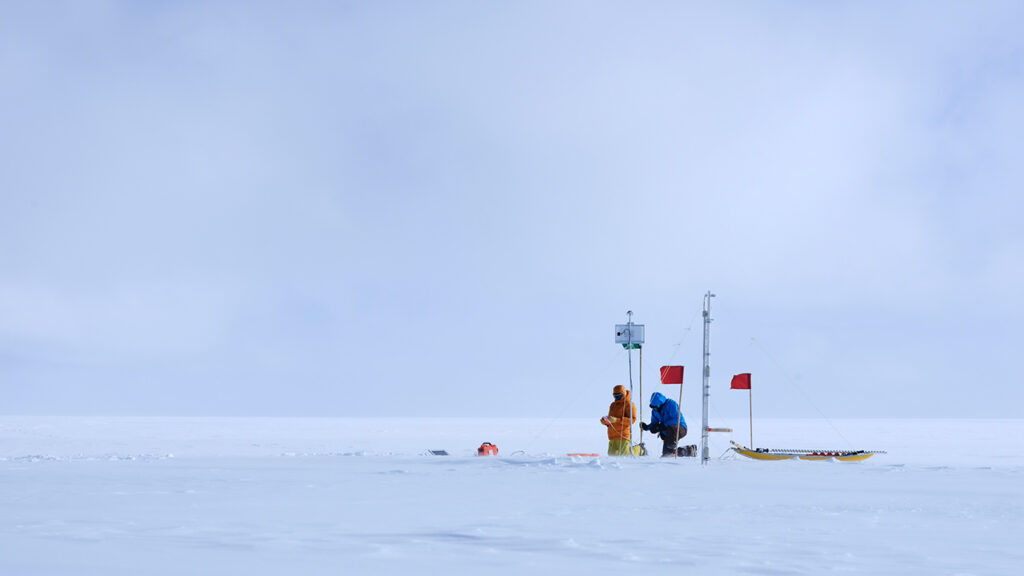
Arctic-hardened automated drones to measure impacts of climate change in remote and under-sampled regions
The alarming rate of ice loss from Greenland is the single-largest contributor to global sea level rise.
Menapia designs and operates drone‑based atmospheric‑measurement systems, equipping NCAS researchers with bespoke tools that are both refined and resilient in the planet’s harshest environments. A specially developed optical sensor, carried by an autonomous drone with ice‑phobic propellers and an insulated support dock, will enable NCAS to characterise climate‑critical clouds up to 4 km above the Greenland ice sheet.
Menapia and NCAS are setting a new benchmark for automated polar research, to deliver vital insights that will shape global climate strategies for years to come.
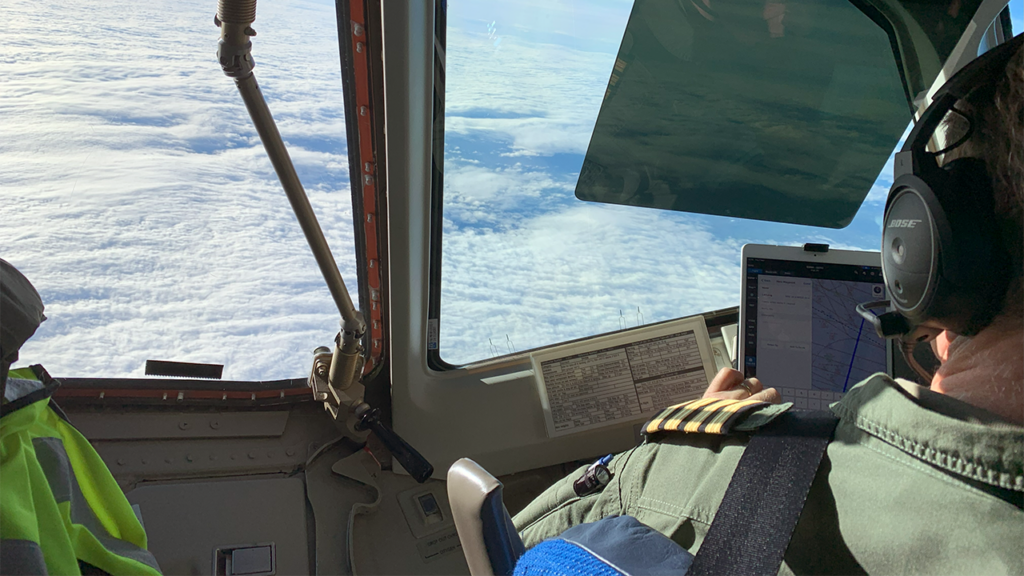
NCAS research aircraft verifies EarthCARE satellite for better weather and climate prediction
Satellites like EarthCARE feed vital information from space into weather forecasts and climate change predictions.
A partnership between NCAS, NCEO, and the European Space Agency made sure EarthCARE is calibrated and working as it should.
NCAS coordinated its research aircraft flights to follow directly under the path of the satellite as it orbited hundreds of kilometers above the Earth’s surface.
The aircraft flew inside the same clouds that the satellite was observing from above, and took measurements to confirm that the satellite was working as it should.
Innovative technology and a rigorous approach to validation is providing high-quality data that can drive new insights into the planet’s changing climate.
Emissions-testing of aviation fuels to reduce impact of flying on air quality and climate change
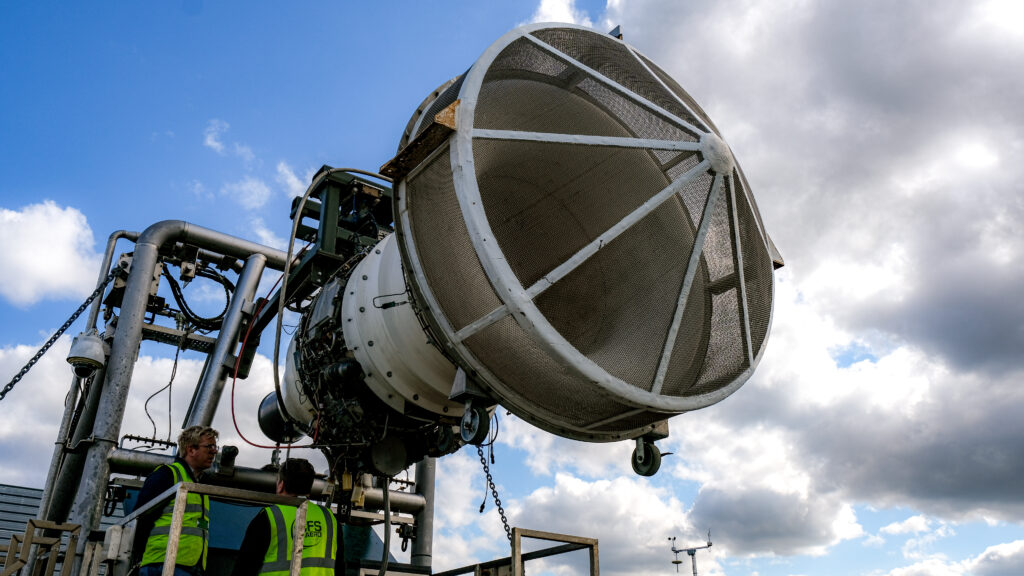
NCAS and Neste – the world’s leading producer of sustainable aviation fuel – have monitored emissions from aircraft engines running on different fuels.
On the ground, engineering specialists at SCITEK provided a test engine and developed a bespoke probe for NCAS researchers, enabling detailed sampling of emissions within a few centimetres of aircraft exhausts. In-flight, NCAS’s research aircraft has flown in close formation with another aircraft to sample emissions within 60 metres.
Testing shows that at low thrusts, for every kilogram of blended sustainable aviation fuel burnt there is approximately 80% less in mass of non-volatile particulate matter – which warms the atmosphere and is harmful to health. At cruise thrusts, the burning of sustainable aviation fuel also produced less pollutant emissions.
The aviation sector can use our data to improve sector-wide understanding of the gases and particles released from gas turbine engines, and can take stock of their impacts on local air quality and rising global temperatures.
Life-saving weather forecasting services in Southern Africa
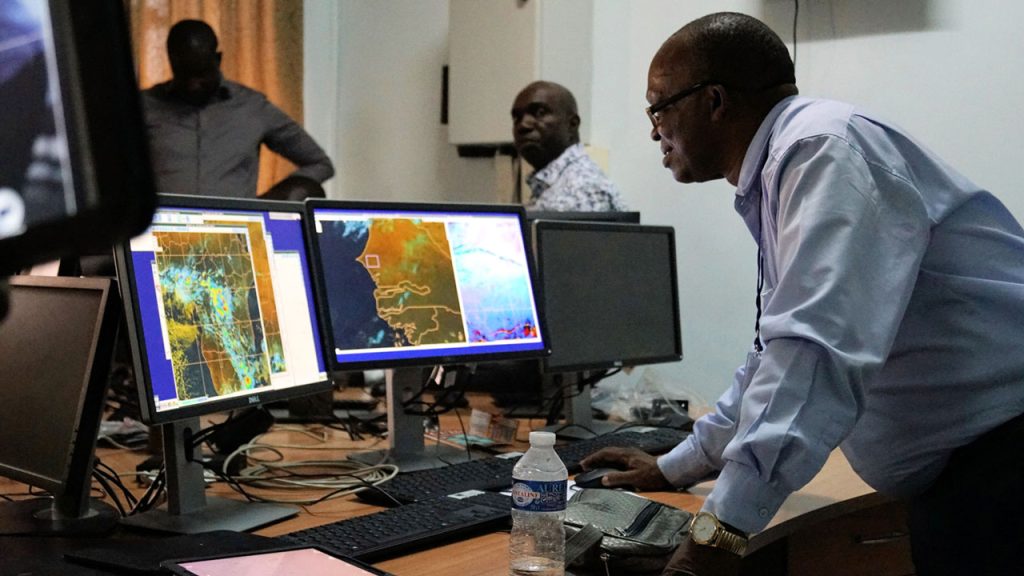
Climate change is driving more intense rainfall in Southern Africa, threatening lives and livelihoods in vulnerable urban areas.
Working with African authorities, NCAS developed real-time nowcasting tools and short-range forecasts to provide life-saving weather alerts via mobile apps, texts and voice messages.
These systems aim to support decision-making for communities, businesses and emergency responders up to 48 hours ahead of storms.
NCAS is also identifying sustainable business models to help African agencies maintain these forecasting services long-term, building on experience from similar work in East Africa and beyond.
Quantifying the role of climate change in insured losses from extreme weather
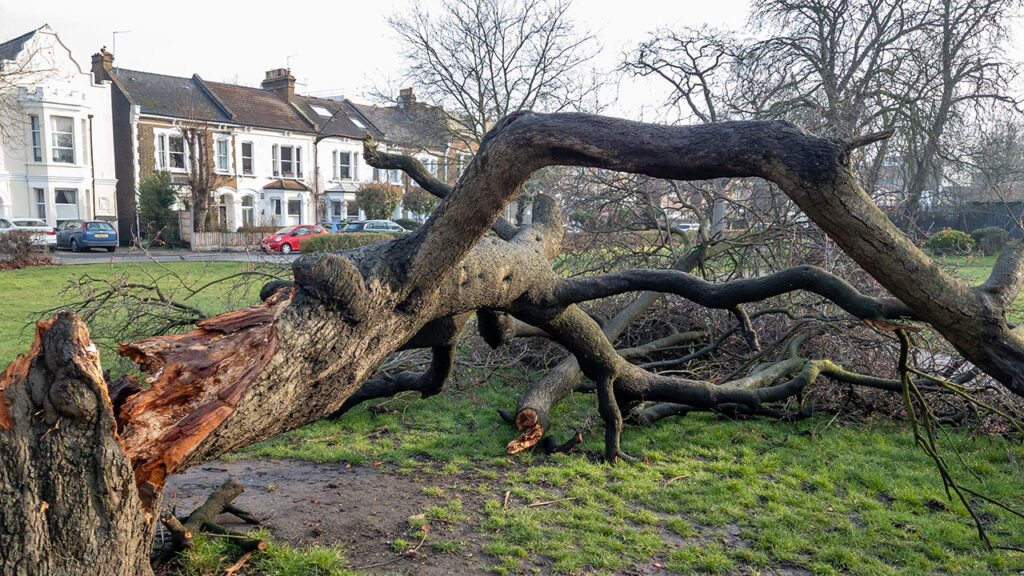
Extreme weather events are a major challenge for the natural catastrophe reinsurance sector, raising urgent questions about how climate change is altering risk profiles and financial exposure.
In partnership with AON Impact Forecasting, NCAS applied a new attribution method to assess the influence of climate change on losses from 2022’s Storm Eunice. By combining high-resolution weather simulations with industry loss models, the team were able to directly link climate impacts to insured damages.
The study marks an important step in integrating climate science into the decision-making frameworks of the reinsurance industry.
NCAS found that climate change may have almost doubled the insured losses from Storm Eunice. This builds on previous research showing that the storm’s most damaging winds were intensified by climate change.
Ensuring weather-resilient oil and gas installations
Our ability to track storms and estimate extreme wave heights helps the oil and gas industry to design and manage risks to manned offshore oil and gas platforms.
By reducing the uncertainty of extreme storms, winds and waves our research supports mitigation measures that keep personnel safe, ensure installations are weather-resilient, and guarantee ongoing oil and gas extraction.
Monitoring weather forecast accuracy
The BBC works with us to regularly monitor the accuracy of MeteoGroup weather forecasts.
We evaluate the accuracy of national forecasts by using weather data collected from observing stations around the UK, helping the BBC to ensure the best quality weather forecasts for the UK public.